

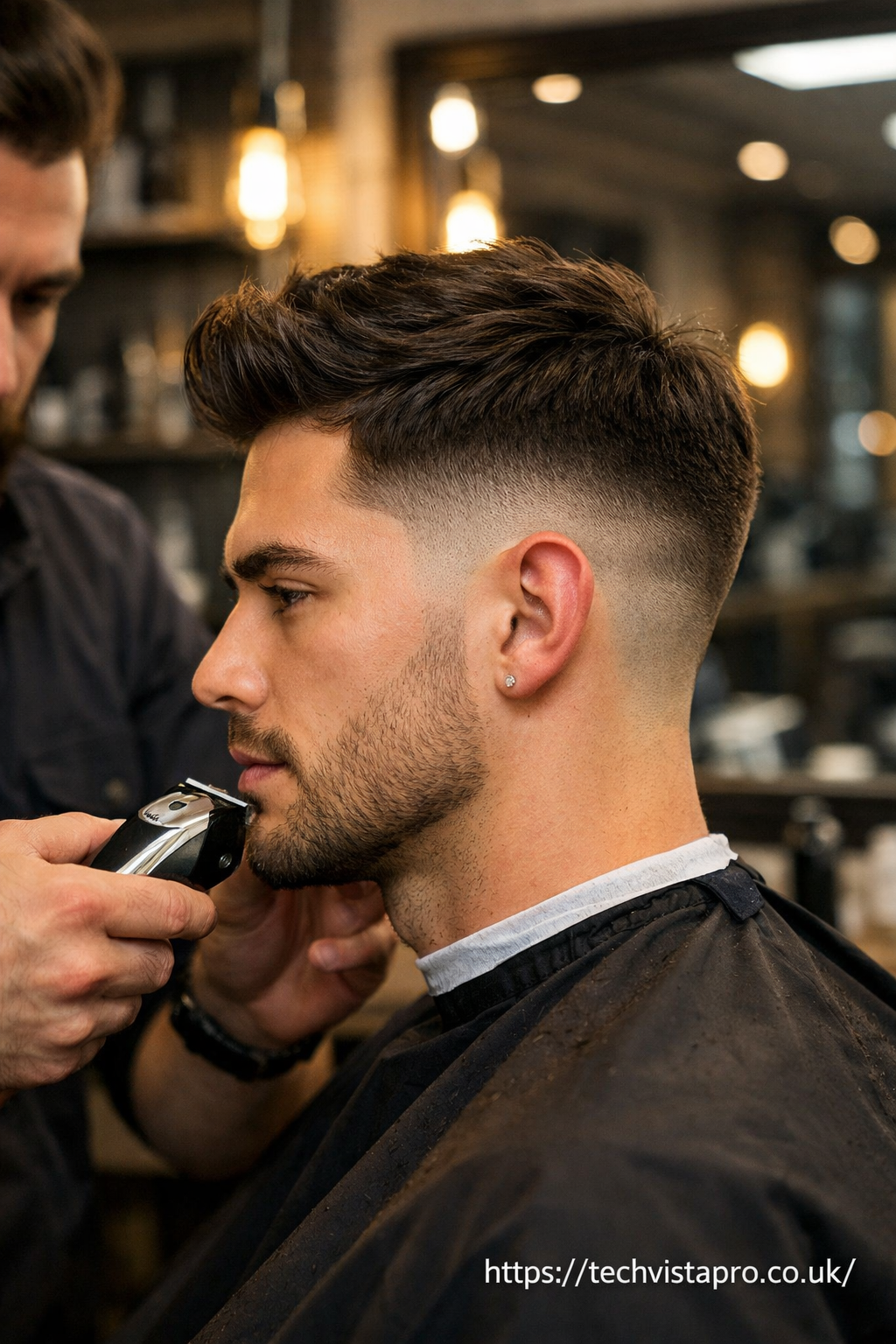
The low fade is one of the most requested and recognizable hairstyles in modern barbering, known for its clean transition, subtle contrast, and versatile styling potential. In simple terms, a low fade haircut gradually reduces hair length from the top down to the neckline, with the fading line starting low near the ears. This creates a smooth, blended appearance that feels both professional and stylish at the same time.
In recent years, the low fade has become a global grooming standard across barbershops, fashion communities, and social media platforms. Its popularity comes from its ability to suit almost every face shape, hair type, and personal style. Whether paired with curly hair, straight hair, waves, or textured crops, the low fade remains a foundation for modern men’s hairstyles and continues to evolve with new variations and trends.
What Is a Low Fade and How It Works in Barbering
A low fade haircut is defined by the placement of the fade line, which begins just above the ears and gradually blends downward into shorter hair or skin. Unlike high fades or mid fades, the low fade maintains more length on the sides, giving a softer and more natural appearance. This makes it ideal for individuals who prefer a balanced and less aggressive haircut.
In professional barbering, the low fade is achieved using gradual clipper guard transitions and blending techniques that eliminate harsh lines. The barber carefully controls the fade zone to ensure a seamless gradient from longer hair on top to shorter hair near the neckline. This precision is what gives the low fade its clean and polished finish.
Because of its subtle structure, the low fade is often recommended for first-time clients who are exploring fade haircuts. It provides a modern look without being overly dramatic, making it suitable for both casual and formal environments.
History and Evolution of the Low Fade Style
The low fade has its roots in traditional military grooming, where short and clean haircuts were required for discipline, hygiene, and uniformity. Over time, these practical styles evolved into fashion-forward cuts as barbers began experimenting with blending techniques and more artistic transitions.
During the late 20th century, fade haircuts became a defining feature of urban barber culture, especially in communities where personal grooming and self-expression were closely connected. The low fade emerged as a softer alternative to the sharper high fade, offering a more natural progression of length while still maintaining structure.
In today’s grooming culture, the low fade has evolved into a universal hairstyle that crosses cultural and professional boundaries. It is now commonly seen in business environments, sports industries, music scenes, and everyday street fashion, making it one of the most adaptable modern haircuts.
Key Characteristics That Define a Low Fade
The defining feature of a low fade is its gradual transition starting near the lower portion of the head. This subtle placement ensures that the fade does not overpower the overall hairstyle, allowing the top section of the hair to remain the focal point.
Another important characteristic is the blending technique used by barbers. A well-executed low fade should have no visible lines or harsh separations between hair lengths. Instead, it should appear as a smooth gradient that naturally flows from thick to short.
The low fade also maintains versatility in styling. It can be combined with different top hairstyles, including textured crops, pompadours, slick backs, curls, and waves. This flexibility is one of the main reasons it remains a dominant haircut choice in modern barbering.
Different Types and Variations of Low Fade Haircuts
The low fade is not a single fixed style but a base for many variations that allow personalization. One of the most popular versions is the low skin fade, where the hair gradually fades completely into the skin for a sharper and more defined look. This version is often chosen by individuals who prefer a bold and modern appearance.
Another variation is the low taper fade, which offers a more conservative approach by keeping a slight length near the neckline and sideburns. This creates a softer transition and is commonly preferred in professional or formal settings where subtle grooming is important.
The low drop fade is another widely used style, where the fade line curves downward behind the ear. This adds dimension and shape to the haircut, making it ideal for individuals who want a slightly more stylized version of the classic low fade.
How Barbers Create a Perfect Low Fade
Creating a low fade requires technical precision and an understanding of hair blending techniques. Barbers typically start by establishing a baseline near the lower side of the head and then gradually work upward using different clipper guard sizes to build a smooth transition.
The blending process is the most critical part of the haircut. Barbers use clipper-over-comb methods and detailing tools to remove any visible lines between different lengths of hair. This step requires experience and a steady hand to ensure both sides of the head remain symmetrical.
Final detailing around the neckline, ears, and sideburns completes the haircut. A professionally executed low fade should appear effortless, with a natural flow that enhances the overall hairstyle without drawing attention to the fade itself.
Low Fade for Different Hair Types and Face Shapes
One of the reasons the low fade is so widely popular is its compatibility with different hair textures. For straight hair, it creates a clean and structured appearance. For curly and wavy hair, it helps control volume while allowing natural texture to remain visible on top.
The low fade also works well with different face shapes. It is especially flattering for round faces because it adds structure and definition. For square and oval faces, it enhances natural symmetry without altering facial proportions too aggressively.
Barbers often adjust the fade height and blending intensity depending on individual features. This customization ensures that the haircut complements natural appearance and enhances overall facial balance.
Maintenance and Care for a Low Fade Haircut
Maintaining a low fade requires regular upkeep to preserve its clean appearance. Since hair grows quickly around the sides and neckline, most individuals need a touch-up every two to three weeks to keep the fade sharp and defined.
Daily care is relatively simple and focuses mainly on the top section of the hair. Depending on the chosen style, light styling products such as matte clay, pomade, or styling cream can help maintain shape and texture without making the hair look heavy.
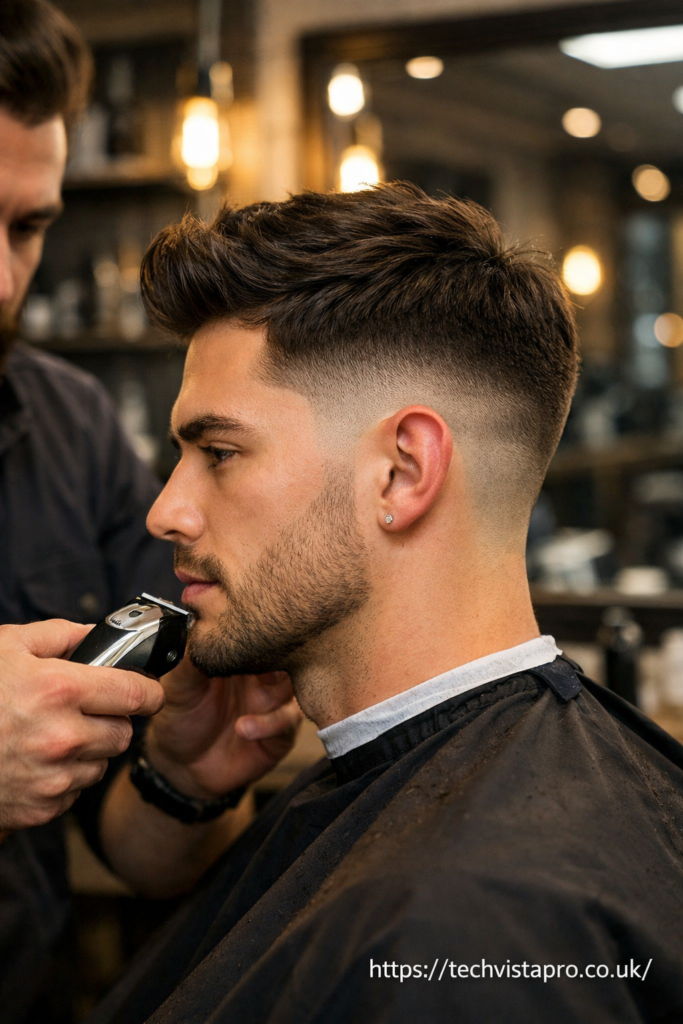
The faded areas themselves require minimal daily maintenance, but cleanliness around the neckline and edges is important. Keeping the haircut fresh ensures that the fade remains visible and well-defined over time.
Cultural Influence and Modern Popularity of the Low Fade
The low fade has become a major influence in global grooming culture, widely seen in fashion, sports, entertainment, and social media trends. It is often associated with modern masculinity, clean presentation, and stylish simplicity.
Barbers around the world consider the low fade a fundamental skill because it requires precision and consistency. It is often one of the first fade techniques mastered in professional barber training due to its balanced structure and high demand.
Social media platforms have also contributed to its popularity, with countless tutorials, transformations, and style variations being shared online. This has helped the low fade evolve continuously while maintaining its classic foundation.
Why the Low Fade Remains a Timeless Haircut Choice
The low fade remains timeless because it strikes the perfect balance between style and subtlety. It is neither too bold nor too minimal, making it suitable for nearly every lifestyle and profession. This universal appeal ensures its long-term relevance in grooming trends.
Another reason for its lasting popularity is its adaptability. It can be combined with almost any hairstyle on top, allowing endless customization while maintaining a clean foundation. This flexibility keeps it fresh even as fashion trends change.
Ultimately, the low fade continues to dominate modern barbering because it delivers a consistent, clean, and stylish appearance that works across cultures and generations.
Conclusion: The Enduring Appeal of the Low Fade Style
The low fade haircut stands as one of the most versatile and widely adopted styles in modern grooming. Its defining feature is the subtle transition that begins low on the head and blends smoothly into shorter lengths, creating a clean and natural look
