

Understanding a store’s return policy is an essential part of making confident purchases, especially when it comes to home improvement products that can be expensive or project-dependent. The return policy of The Home Depot is widely regarded as flexible, but it also includes important conditions, category-specific rules, and exceptions that customers should fully understand before making a purchase.
This comprehensive guide explains everything about the Home Depot return policy in a clear and detailed way. From standard return timelines to refund methods and special cases, this article helps you navigate the process smoothly while avoiding common mistakes.
Understanding the Basics of the Home Depot Return Policy
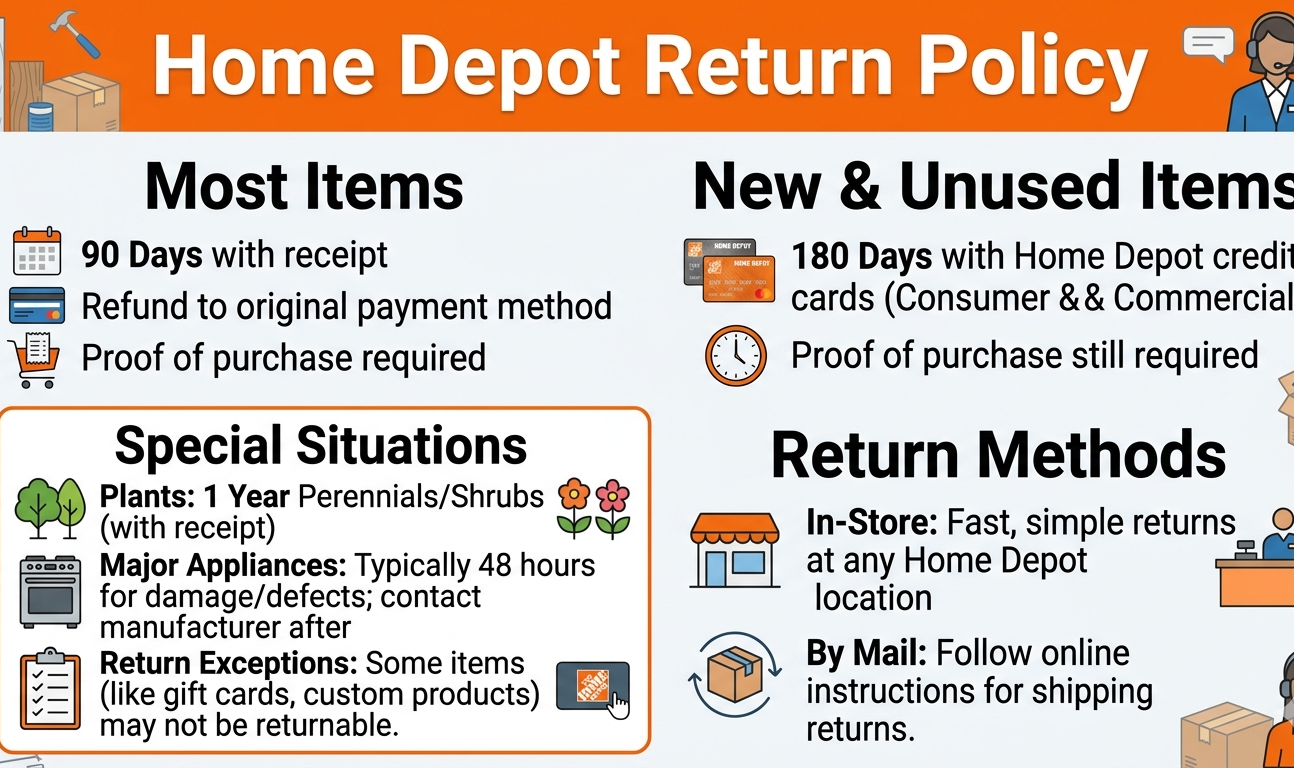
The Home Depot offers a structured yet customer-friendly return policy designed to accommodate a wide range of purchases. In general, most items can be returned within a standard 90-day period from the date of purchase. This applies to both in-store and online purchases, making the policy consistent across shopping methods.
While the overall framework is simple, the policy includes several nuances that can affect eligibility. The condition of the item, availability of proof of purchase, and product category all play a role in determining whether a return will be accepted. This means that while the policy is flexible, it is not unlimited.
Customers benefit from the company’s emphasis on convenience, but they must also take responsibility for understanding specific conditions. Being aware of these details ensures that returns are processed without delays or complications.
The Standard 90-Day Return Window Explained
The most common aspect of the Home Depot return policy is the 90-day return window. This timeframe begins on the date of purchase and applies to a wide range of items, including tools, hardware, lighting fixtures, and home décor products. It provides customers with enough time to evaluate whether a product meets their needs.
During this period, items are expected to be in new or gently used condition. While original packaging is not always required, having it can significantly simplify the return process. Items that are heavily used or damaged may not be accepted, even if they fall within the allowed timeframe.
This 90-day window strikes a balance between customer flexibility and reasonable limitations. It allows for returns during project timelines while encouraging responsible purchasing and usage.
Extended Returns for Home Depot Credit Card Purchases
One of the most valuable features of the Home Depot return policy is the extended return period for purchases made using a Home Depot consumer credit card or commercial account. These purchases may qualify for a 365-day return window, offering significantly more time than the standard policy.
This extended period is particularly beneficial for contractors, business owners, and homeowners working on long-term projects. It allows customers to purchase items in advance and return them if plans change or requirements evolve over time.
However, this extended return privilege does not apply universally to all items. Certain product categories still follow shorter return windows regardless of payment method. Customers should verify the terms associated with specific purchases to avoid misunderstandings.
Returning Items Without a Receipt
Returning an item without a receipt is possible at Home Depot, but it involves additional verification steps. The store may attempt to locate the transaction using the customer’s credit card, phone number, or purchase history linked to an account.
If the purchase cannot be verified, the store may still accept the return and issue store credit instead of a refund to the original payment method. This credit is often based on the item’s lowest selling price, which may differ from the amount originally paid.
Customers are usually required to present a valid form of identification for no-receipt returns. The process is designed to balance flexibility with fraud prevention, ensuring fair use of the policy while protecting the business.
Product Categories With Special Return Rules
Not all products at Home Depot follow the same return timeline. Certain categories have shorter return windows due to their nature, value, or usage conditions. For example, items such as furniture, electronics, and gas-powered tools often have a 30-day return period.
Major appliances are subject to even stricter requirements. Customers must report any damage or defects within a short timeframe, often within 48 hours of delivery. This makes it essential to inspect these items immediately upon arrival.
There are also unique categories such as plants, which may come with extended guarantees rather than standard return policies. These variations highlight the importance of reviewing product-specific terms before making a purchase.
Non-Returnable and Restricted Items
Some items sold at Home Depot are not eligible for return under standard conditions. These typically include custom-made products, special-order items, and certain materials that cannot be resold once opened or used.
Gift cards and similar prepaid items are also non-returnable, as they hold stored value rather than physical goods. Additionally, hazardous materials may have strict handling and return restrictions due to safety regulations.
Customers should be especially cautious when purchasing items in these categories. Understanding these limitations beforehand can prevent inconvenience and financial loss later.
In-Store Return Process and What to Expect
Returning items in-store is generally the quickest and most straightforward option. Customers can bring the item to the customer service desk along with proof of purchase. In many cases, refunds are processed immediately after the return is approved.
Store associates may inspect the item to ensure it meets return conditions. If everything is in order, the refund is issued to the original payment method or as store credit, depending on the situation.
The in-store process is designed for efficiency and convenience. It allows customers to resolve returns quickly while receiving immediate confirmation of the outcome.
Returning Online Purchases and Large Items
For online purchases, Home Depot offers flexible return options. Customers can either return items to a physical store or ship them back using a return label. Returning items in-store is often faster, while shipping may take additional time due to transit and processing.
Large or bulky items, such as appliances or furniture, may require scheduled pickup services. These returns involve coordination with customer service to arrange proper handling and transportation.
The ability to choose between in-store and shipping returns adds convenience, especially for customers who shop online frequently. However, planning ahead is important to ensure a smooth experience.
Refund Methods and Processing Time
Refunds at Home Depot are typically issued to the original form of payment. Credit and debit card refunds may take several business days to reflect in the account after processing, depending on the bank’s policies.
Cash purchases are usually refunded in cash when returned in-store, while check payments may involve additional processing time. When a receipt is not available, refunds are generally issued as store credit.
Shipping fees are not always refundable unless the return is due to an error on the retailer’s part. Understanding how refunds are processed helps customers set realistic expectations and avoid confusion.
Conclusion: Making the Most of the Home Depot Return Policy
The Home Depot return policy provides a balanced combination of flexibility and structure, making it one of the more accommodating policies in the retail industry. With a standard 90-day return window, extended options for credit card purchases, and multiple return methods, customers are given a high level of convenience
