

Who Is David Packouz?
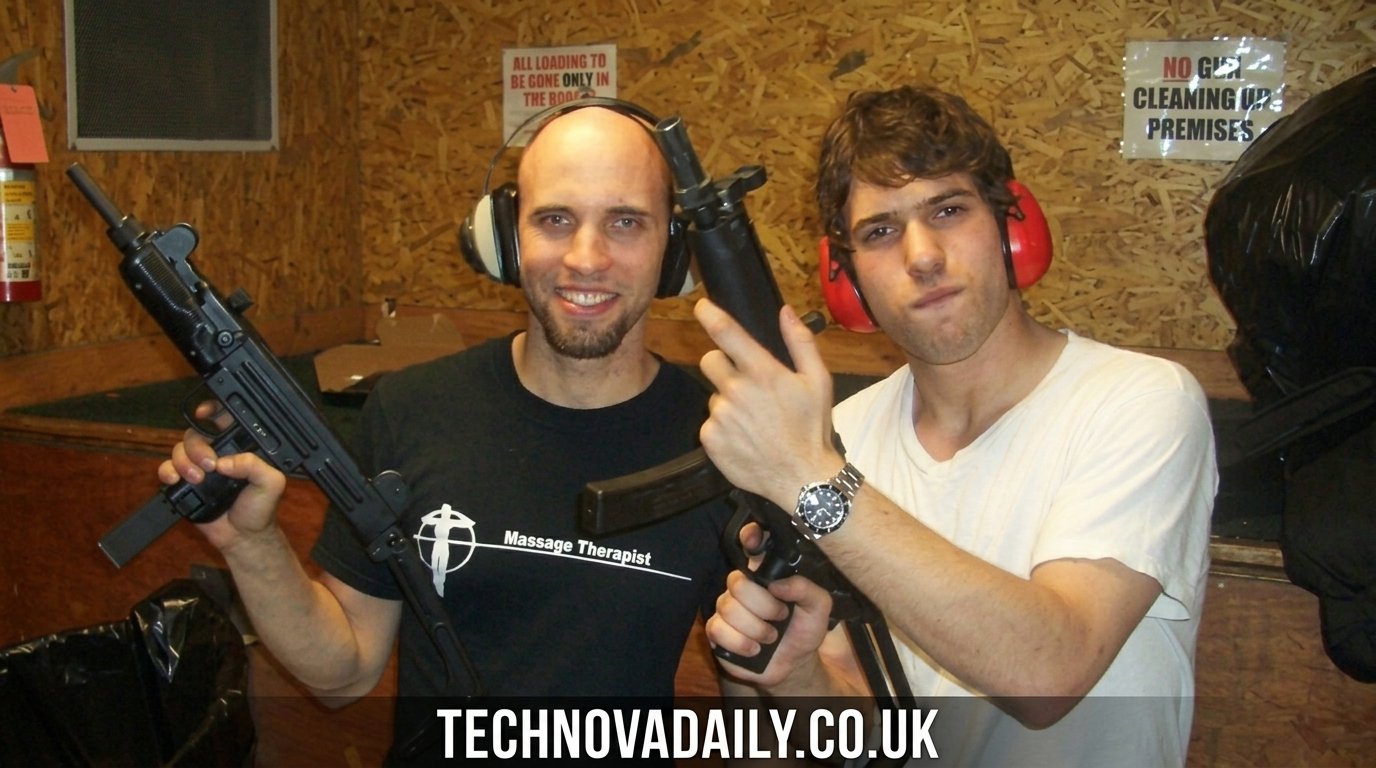
David Packouz is an American entrepreneur, inventor, and musician best known for his controversial past as an international arms dealer and his surprising second act as a music technology innovator. Born David Mordechai Packouz, he rose to public attention after the 2016 film War Dogs, directed by Todd Phillips, dramatized his life story. In the movie, actor Miles Teller played a young version of Packouz, bringing his unlikely journey from massage therapist to Pentagon contractor into mainstream pop culture.
What makes David Packouz genuinely interesting isn’t just the scandal that once surrounded him, but what he did afterward. Rather than fading into obscurity following his legal troubles, he reinvented himself as the founder and CEO of Singular Sound, a music technology company. This transformation from a young man caught in a federal fraud case to a respected inventor in the musical instrument industry is a rare example of a public downfall followed by a genuine, well-documented comeback.
Early Life and Background
Packouz was born on February 16, 1982, in St. Louis, Missouri, into a large Orthodox Jewish family. He was one of nine children born to Rabbi Kalman Packouz and Shoshana Packouz. His father was a well-known religious figure and author associated with Aish HaTorah, which gave David an upbringing rooted in structure and study, even though his teenage years were marked by rebellion and experimentation.
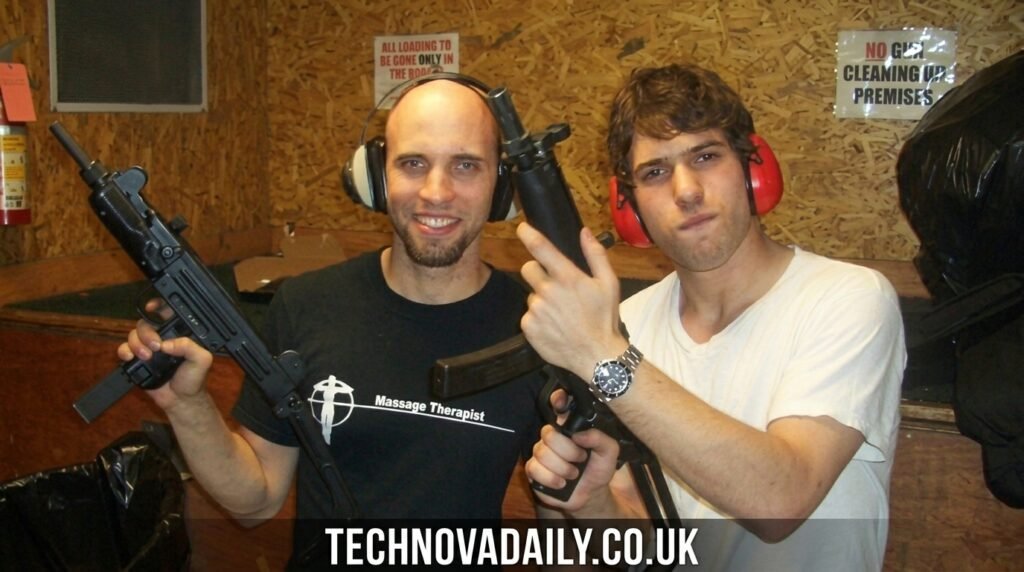
Before entering the world of international arms deals, Packouz worked as a licensed massage therapist, a detail that often surprises people who only know him through the War Dogs narrative. He briefly attended the University of Florida before pursuing other paths. This grounded, somewhat unconventional background helps explain why his later business ventures, first in weapons and later in musical instruments, reflect a person willing to learn unfamiliar trades quickly and adapt to new industries.
How David Packouz Got Into the Arms Business
In September 2005, Packouz joined AEY Inc., an arms dealing company run by his childhood friend Efraim Diveroli. At the time, Packouz was 23 and Diveroli was only 19, yet the pair managed to secure a striking number of federal contracts. By the end of 2006, AEY had already won 149 contracts worth roughly 10.5 million dollars, supplying the U.S. government with munitions, gear, and other military supplies.
Packouz has explained in interviews that his ability to interpret dense legal and procurement documents came from his years studying religious texts in yeshiva, a skill that turned out to be surprisingly useful in government contracting. This period of rapid growth set the stage for the deal that would define, and ultimately derail, his early career: a massive contract to supply ammunition to the Afghan National Army.
The 300 Million Dollar AEY Inc. Contract
In early 2007, AEY Inc. landed a nearly 300 million dollar contract with the U.S. government to supply the Afghan Army with ammunition, including rounds for AK-47 rifles and Dragunov sniper rifles, along with aviation rockets. For two young entrepreneurs in their early twenties, this was an extraordinary achievement in the competitive world of defense contracting, and it briefly made them major players in an industry usually dominated by established firms.
The scale of the contract brought intense scrutiny, partly because of the age of the arms dealers involved and partly because of how quickly they had grown from a small outfit into a company handling a nine-figure government deal. This attention would soon expose serious problems with how AEY sourced its ammunition, setting off a chain of events that led to a federal investigation.
The Chinese Ammunition Scandal and Legal Consequences
The core of AEY’s downfall involved ammunition that had originally been manufactured in China, a country whose military goods were banned from U.S. government contracts. Investigators found that Packouz and his associates repackaged the ammunition to obscure its true origin, which the government treated as fraud rather than a simple oversight. This became known publicly as the Chinese ammunition scandal, and it triggered a lengthy legal battle involving the Army and the Department of Justice.
Media outlets nicknamed Packouz and Diveroli the “stoner arms dealers,” a label that stuck largely because of their young age and casual lifestyle. In January 2011, Packouz pleaded guilty to one count of conspiracy to defraud the United States. While Diveroli received a four-year prison sentence, Packouz was sentenced to seven months of house arrest, a considerably lighter punishment that reflected his more limited role in the scheme.
The War Dogs Movie and Hollywood Portrayal
David Packouz’s story might have remained a footnote in defense industry history if not for extensive magazine coverage, including a widely read Rolling Stone feature that first brought national attention to the case. That article eventually caught Hollywood’s attention, leading to the 2016 film War Dogs, which reimagined the AEY saga as a dark comedy about greed, ambition, and the strange world of government arms contracting.
Miles Teller portrayed a character based on Packouz, while Jonah Hill played a character based on Diveroli. Interestingly, the real David Packouz appears briefly in the film himself, playing a guitarist performing at a retirement home, a small nod to his genuine musical background. The film brought renewed public interest in Packouz, and rather than avoiding the spotlight, he used it as a platform to talk openly about his past and his newer, more legitimate ventures.
David Packouz’s Transition to Music Technology
After completing his house arrest, Packouz shifted his focus almost entirely away from defense contracting and toward something he had always loved: music. He founded Singular Sound, a company built around helping musicians, particularly solo guitarists, perform more dynamically without needing a full band behind them. This pivot from international arms trading to music gear manufacturing is one of the more unusual career transitions in recent business history.
This shift wasn’t simply about escaping his past. Packouz has spoken about music as a lifelong passion that predated his arms dealing career, meaning Singular Sound represented a return to something authentic rather than a random reinvention. Under his leadership, the company grew steadily, eventually becoming known throughout the musical instrument industry for a specific flagship product.
Singular Sound and the BeatBuddy Invention
The product that defined Singular Sound’s early success is the BeatBuddy, a drum machine guitar pedal designed to give solo musicians a realistic, responsive backing beat without needing a drummer. Packouz and his team launched the BeatBuddy through a crowdfunding campaign on Indiegogo, raising approximately 350,000 dollars, making it one of the most successful musical instrument crowdfunding projects at the time.
The BeatBuddy went on to receive recognition throughout the musical instrument industry and helped establish Singular Sound as a credible, respected brand rather than a novelty tied to Packouz’s past. In 2016, the company partnered with the nonprofit Guitars Over Guns to donate BeatBuddy equipment to underserved young musicians, a philanthropic effort that added a meaningful layer to the company’s public image and connected Packouz’s business success to a genuine social cause.
War Dogs Academy and Teaching Others
Beyond music technology, Packouz co-founded War Dogs Academy, an online educational platform that teaches people how to legally and successfully bid on government contracts. Given his firsthand experience with both the opportunities and the serious pitfalls of federal contracting, this venture positions him as someone sharing hard-earned lessons rather than simply capitalizing on notoriety.
The academy reflects a broader pattern in how Packouz has handled his public story: instead of avoiding discussion of his past, he has repeatedly used it as a teaching tool, whether through interviews, his cameo in War Dogs, or structured courses aimed at helping others avoid the mistakes that led to his own legal troubles.
David Packouz’s Net Worth Today
Estimates of David Packouz’s net worth vary considerably across different sources, ranging from around 3 million dollars to higher figures in some less rigorously sourced reports. Given that Packouz has not publicly disclosed detailed financial statements, any specific figure should be treated as an approximation rather than a confirmed fact. What is well documented, however, is that his income today comes primarily from Singular Sound and its product lineup, along with War Dogs Academy and any royalties or fees tied to his life story being adapted into film.
Unlike his early wealth from AEY Inc., which was built on a business model that ultimately collapsed under legal scrutiny, his current financial standing rests on legitimate, ongoing ventures in music technology and education. For anyone researching David Packouz, this distinction matters: his story isn’t just about how much money he has made, but about how dramatically the source of that income has changed since his arms dealing days.
