

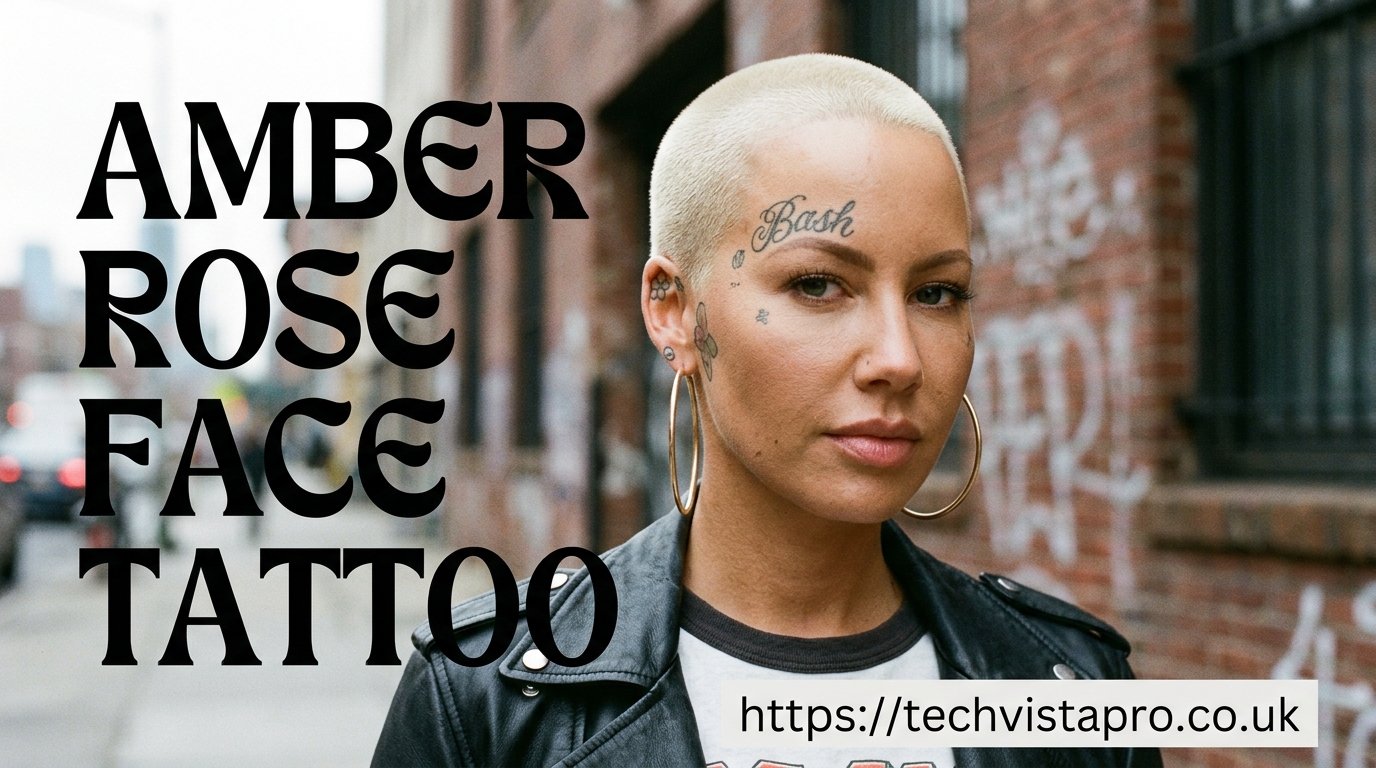
Amber Rose has long been a bold and controversial figure in pop culture, known for her outspoken personality, fearless fashion choices, and unapologetic attitude toward self-expression. Among all her public style statements, her face tattoo became one of the most widely discussed celebrity tattoos in recent years. The phrase inked across her forehead sparked global attention, debates on body autonomy, and conversations about motherhood, identity, and modern beauty standards. This article explores the full story behind Amber Rose’s face tattoo, its meaning, public response, and its place in today’s celebrity culture.
Early Fame and the Evolution of Amber Rose’s Identity
Amber Rose first entered the public eye through modeling and appearances in music videos within hip-hop culture. Over time, she transitioned from being recognized mainly for her relationships and appearances to building a strong independent identity as a media personality, entrepreneur, and activist. Her career path has consistently reflected themes of confidence, independence, and rejecting societal pressure.
As she became more established, Amber Rose also became a vocal advocate for body positivity and women’s rights. Her public persona has often challenged traditional expectations of how women in entertainment should look or behave. This foundation plays an important role in understanding why her decision to get a face tattoo was viewed as more than just fashion—it became a statement of personal freedom and ownership over her body.
The Moment the Face Tattoo Was Revealed
Amber Rose first revealed her forehead tattoo publicly in 2020, and it immediately captured massive media attention. The tattoo is placed prominently across her forehead in cursive script, making it highly visible in every appearance, interview, and public event. Its placement alone contributed to its viral spread, as face tattoos are still considered rare in mainstream celebrity culture.
The tattoo reads “Bash Slash,” a phrase that quickly became the center of online discussion. Fans and media outlets began analyzing its meaning, while social media platforms amplified both admiration and criticism. According to multiple reports, the tattoo was done as part of a personal tribute rather than a fashion experiment, which added emotional depth to the public reaction.
Meaning Behind “Bash Slash” and Its Personal Significance
The most important aspect of Amber Rose’s face tattoo is its meaning, which is deeply connected to her children. “Bash” refers to her son Sebastian Taylor Thomaz, whom she shares with rapper Wiz Khalifa. “Slash” refers to her younger son, Slash Electric Alexander Edwards, whom she shares with Alexander “AE” Edwards.
The tattoo combines both of her sons’ names into a single phrase, symbolizing unity and unconditional maternal love. Instead of choosing a hidden or traditional tattoo placement, she chose her forehead, making the tribute permanently visible to the world. This decision reflects her belief in openly expressing what matters most in her life, even in a highly public and judgmental environment.
Emotional Motivation and Life Reflections Behind the Tattoo
Amber Rose has explained that the decision to get the tattoo came from a period of deep reflection on life and mortality. One major influence was the passing of Kobe Bryant, which caused her to think about how quickly life can change and how important it is to express love without hesitation. She has described the experience as a reminder that life is unpredictable and should be lived without regret.
In interviews, she has also shared that personal family experiences and emotional moments encouraged her to embrace permanent expressions of love. This mindset led her to view the tattoo not as a rebellious act, but as a meaningful tribute. The phrase “live your best life” has often been associated with her explanation of the tattoo’s emotional foundation, reinforcing her philosophy of authenticity and emotional honesty.
Public Reaction and Social Media Controversy
When Amber Rose revealed her face tattoo, the reaction was immediate and deeply divided. Supporters praised her for expressing love for her children in such a bold and permanent way. Many viewed it as a powerful symbol of motherhood and self-determination, especially in a world where women’s choices are often judged harshly.
On the other hand, critics questioned the decision to place such a visible tattoo on her face. Some argued that it could affect professional opportunities or long-term public perception. Social media amplified both sides of the debate, turning the tattoo into a viral topic that went far beyond entertainment news and entered broader cultural discussions about appearance, freedom, and societal judgment.
Face Tattoos in Celebrity Culture and Modern Beauty Standards
Amber Rose’s tattoo also reflects a larger shift in how society views body art, especially among celebrities. While tattoos have become widely accepted over the past two decades, face tattoos still carry a stronger stigma due to their visibility and permanence. When a high-profile figure chooses facial ink, it often becomes a cultural moment.
In modern celebrity culture, self-expression through body modification is increasingly seen as a form of identity rather than rebellion. Amber Rose’s tattoo fits into this evolving narrative, where personal meaning outweighs traditional expectations. It also highlights how celebrities use their physical appearance as a canvas for storytelling and emotional expression.
Motherhood as the Core of Her Public Identity
Motherhood is central to understanding Amber Rose’s face tattoo and her public image. Throughout her career, she has consistently emphasized her role as a mother as her most important identity. The tattoo reinforces this by permanently placing her children’s names on one of the most visible areas of her body.
This choice reflects a modern approach to parenting identity in celebrity culture, where personal life is often integrated into public branding. For Amber Rose, the tattoo is not just about aesthetics but about making motherhood visible in a literal and symbolic way. It represents devotion, responsibility, and emotional grounding in a life often defined by media attention.
Empowerment, Criticism, and Personal Freedom
The tattoo has also become a symbol of empowerment and personal choice. Amber Rose has consistently defended her right to make decisions about her body without needing approval from the public. Her stance aligns with her long-standing advocacy for body positivity and self-ownership.
At the same time, the tattoo continues to attract criticism because it challenges conventional ideas of professionalism and beauty. This tension between empowerment and judgment is what keeps the conversation alive. For some, it represents freedom; for others, it raises questions about long-term consequences in public life. Both perspectives contribute to its ongoing cultural relevance.
Lasting Cultural Impact and Public Legacy
Over time, Amber Rose’s face tattoo has become more than a personal tribute—it has become a cultural reference point. It is frequently discussed in conversations about celebrity influence, body modification, and modern feminism. The tattoo symbolizes a shift in how personal identity is displayed in the digital age.
Its impact extends beyond fashion or entertainment. It reflects a broader cultural moment where individuality and visibility are increasingly valued, even when controversial. Whether admired or criticized, the tattoo has helped solidify Amber Rose’s reputation as a figure who prioritizes authenticity over approval.
Conclusion
Amber Rose’s face tattoo is a powerful example of how personal expression can evolve into cultural conversation. What began as a deeply personal tribute to her children became a widely debated symbol of motherhood, identity, and freedom of choice. The phrase “Bash Slash” carries emotional weight, representing her devotion as a mother and her commitment to living authentically.
