

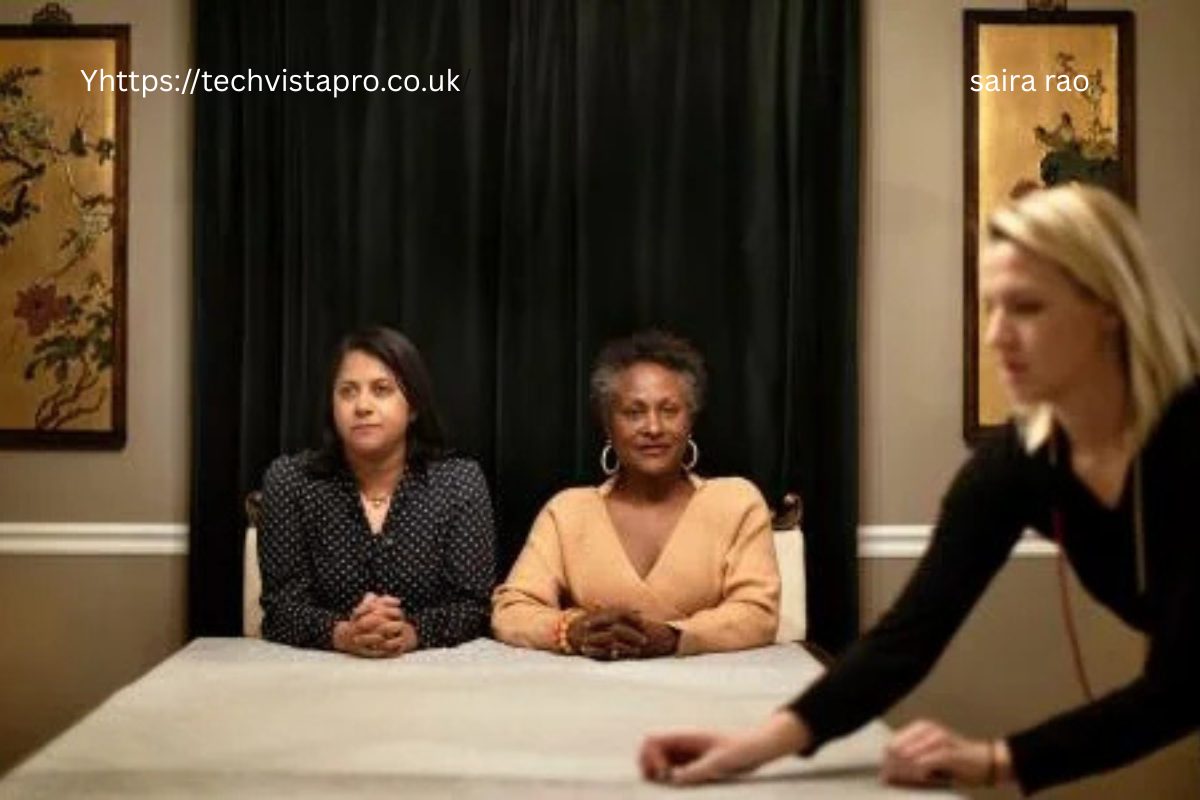
Saira Rao is a prominent American author, activist, and former political candidate who has built her career around advocating for racial and social equity. Known for her outspoken and often provocative style, she has made a name for herself in media, publishing, and public discourse. From her early experiences growing up as the daughter of Indian immigrants in Virginia to her work in law, television, and political activism, Rao’s journey reflects a unique blend of professional rigor and passionate advocacy. Her work explores identity, privilege, and systemic inequality, making her an influential voice in contemporary discussions on race and social justice….
Rao has been involved in several innovative projects, most notably Race2Dinner, which challenges individuals to confront their own biases and understand systemic racism in new ways. She has also authored novels and social commentary books that provide insight into both the Saira Rao personal and societal aspects of race in America. This article explores Rao’s life, career, activism, and ongoing impact, providing a comprehensive overview of her achievements and controversies.
Early Life and Educational Background
Saira Rao was born in Richmond, Virginia, to Indian immigrant parents, both of whom were physicians. Growing up in a multicultural household, she experienced firsthand the challenges and opportunities of navigating multiple cultural identities. These formative experiences played a significant role in shaping her perspective on social justice, diversity, and representation. Rao’s upbringing emphasized education, resilience, and ambition, setting the stage for her future career in law, media, and activism.
Rao attended the University of Virginia, where she earned a bachelor’s degree in history in 1996. Her interest in law and governance led her to pursue a Juris Doctor (JD) at New York University School of Law, one of the most prestigious law schools in the United States. After graduating, Rao worked as a clerk for a judge on the U.S. Court of Appeals for the Third Circuit and Saira Rao then joined Cleary Gottlieb Steen & Hamilton, a prominent corporate law firm. This combination of legal training and practical experience gave her a deep understanding of institutional structures, which later informed her activism.
Her education was not limited to formal degrees. Rao’s early career in television production and media reporting also contributed to her ability to communicate complex ideas effectively to a broader audience. She produced content for major networks, honing skills that would later prove essential in publishing, writing, and public speaking.
Career in Law and Media
Before transitioning fully into activism, Rao built a diverse professional career. Her early work as a lawyer exposed her to corporate and governmental structures, providing her with firsthand knowledge of power dynamics and systemic inequities. While she gained recognition for her legal skills, Rao’s interest in storytelling and social critique led her to the media world, where she worked as a television producer and journalist. She contributed to programming that explored political and social issues, blending investigative reporting with narrative insight.
This combination of law and media experience gave Rao a unique platform to communicate ideas about equity and justice. She was able to translate complex systemic issues into accessible narratives, whether in news segments, documentaries, or written media. Her early Saira Rao career trajectory demonstrates how interdisciplinary experience can enhance advocacy work, equipping activists to engage audiences effectively across multiple channels.
Transition to Publishing and Advocacy
Saira Rao’s interest in representation and inclusion led her to co-found In This Together Media, a publishing company dedicated to creating books that reflect diverse experiences, particularly for children and young adults. This venture focused on stories that showcased protagonists from underrepresented communities, highlighting issues of race, gender, and ability. Through this work, Rao sought to challenge traditional publishing norms and provide educational resources that promote empathy and understanding.
Her publishing efforts were accompanied by public advocacy for equitable media representation. Rao frequently spoke about the importance of seeing oneself reflected in literature, media, and culture. By addressing both the content of storytelling and its broader societal impact, she emphasized that representation is not just a matter of visibility but a tool for social change.
Political Ambitions and the 2018 Congressional Run
In 2018, Saira Rao entered the political arena by running in the Democratic primary for Colorado’s 1st Congressional District. Her campaign emphasized social justice, racial equity, and political reform. Rao positioned herself as a candidate who could challenge entrenched systems and bring new perspectives to Congress. Her platform included reducing the influence of corporate money in politics, creating pathways for immigrant communities, and addressing economic inequality.
Although Rao did not win the primary, her campaign was notable for its emphasis on progressive policies and grassroots engagement. The congressional run elevated her profile nationally and demonstrated her commitment to translating advocacy into tangible political action. Even in defeat, Rao’s campaign contributed to broader conversations about representation and equity within American politics.
Race2Dinner and Innovative Approaches to Activism
One of Rao’s most well-known initiatives is Race2Dinner, a program designed to encourage dialogue about race, privilege, and identity. The concept involves small-group dinners where participants, often white women, discuss issues of systemic racism under Rao’s guidance. The goal is to create a space where participants can explore uncomfortable truths, confront unconscious biases, and Saira Rao develop a deeper understanding of their societal roles.
Race2Dinner has been both praised and criticized. Supporters view it as a practical, innovative approach to anti-racism education, allowing for personal reflection and growth in a structured setting. Critics, however, have questioned the cost and approach of the program, suggesting that it can be divisive or overly confrontational. Regardless, Race2Dinner highlights Rao’s commitment to hands-on, experiential methods of activism, emphasizing dialogue as a catalyst for social change.
Writing and Literary Contributions
Saira Rao has authored both fiction and social commentary. Her novel Chambermaid draws on her experiences in law, blending satire with social critique to explore workplace hierarchies and systemic inefficiencies. Through fiction, Rao provides readers with insight into professional and societal challenges, using narrative to reflect real-world issues.
In non-fiction, Rao co-authored White Women: Everything You Already Know About Your Own Racism and How to Do Better, a guide aimed at helping readers confront their own racial biases and engage constructively in conversations about race. This work combines Saira Rao research, personal reflection, and practical guidance, making complex social issues accessible to a wide audience. Rao’s literary contributions demonstrate her ability to engage thoughtfully with difficult subjects and inspire critical reflection.
Controversies and Public Perception
Rao’s candid approach to discussing race and privilege has sparked both support and controversy. Her outspoken style has led some to accuse her of being polarizing, while others praise her honesty and commitment to fostering meaningful dialogue. Public reactions to her social media presence, political campaigns, and projects like Race2Dinner illustrate the tensions inherent in discussions about race in contemporary America.
Despite criticism, Rao continues to maintain a Saira Rao platform for challenging conversations. She encourages audiences to examine systemic inequities and question personal biases, contributing to a broader cultural discourse. Rao’s work underscores the complexity of advocacy, highlighting the balance between provocation and education in efforts to drive social change.
Legacy and Ongoing Influence
Today, Saira Rao remains a significant figure in activism, publishing, and cultural commentary. Through her initiatives, books, and public appearances, she continues to challenge assumptions about race, gender, and power. Rao’s influence extends beyond her immediate projects, shaping conversations about equity and representation across multiple spheres of American life.

Her legacy lies in her commitment to engaging audiences with difficult topics and encouraging self-reflection. Whether through structured programs like Race2Dinner, her published works, or her public speaking, Rao exemplifies a multifaceted approach to activism that combines education, dialogue, and creative expression.
Conclusion
Saira Rao’s journey from a child of immigrant physicians to a lawyer, media producer, author, and activist illustrates the impact of interdisciplinary experience on advocacy. Through her writing, public speaking, publishing efforts, and innovative projects like Race2Dinner, Rao has created platforms that challenge societal norms, foster critical dialogue, and promote racial and social equity. While her methods and messaging have sparked controversy, her influence in shaping contemporary conversations about identity, privilege, and representation is undeniable. Saira Rao remains a dynamic voice in American activism, demonstrating the power of courage, creativity, and commitment in the pursuit of justice
