

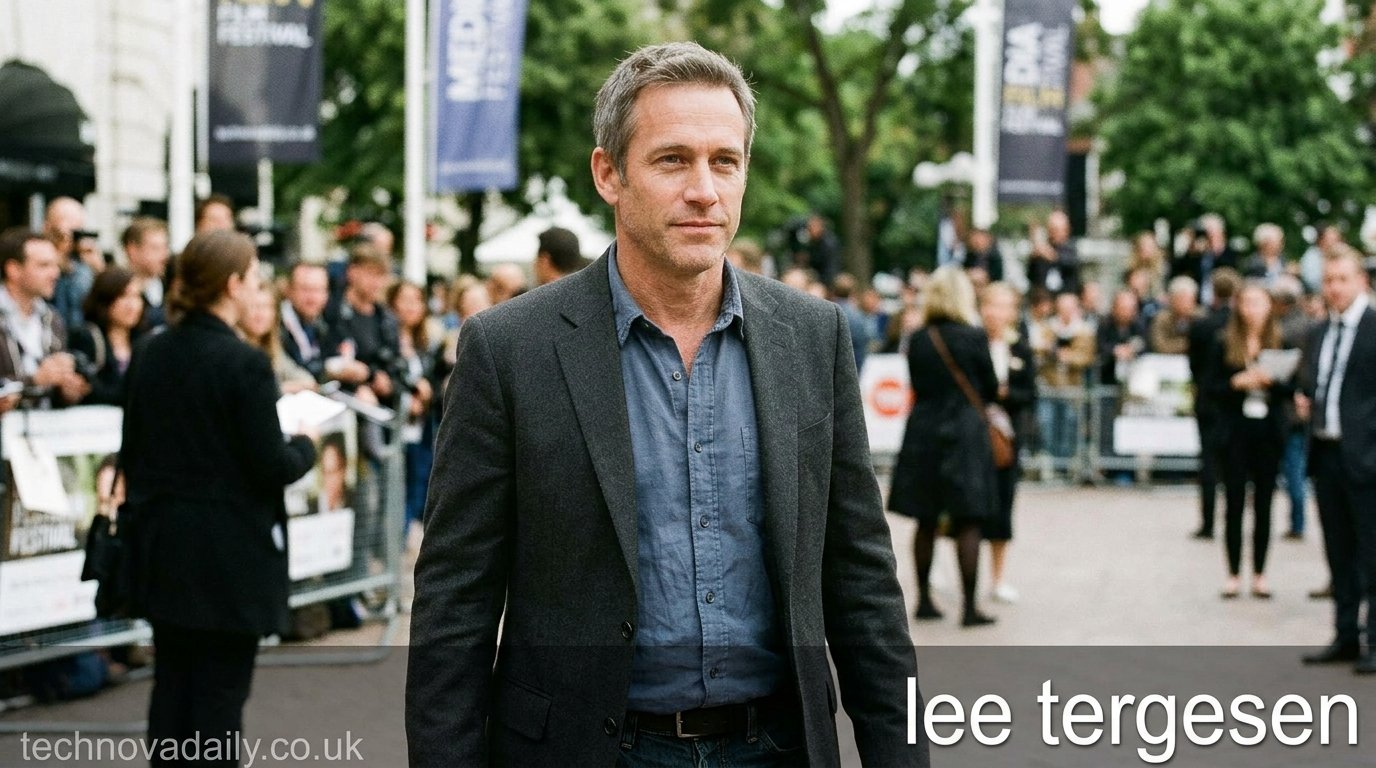
Few character actors have built a career as steady and respected as Lee Tergesen. He is not a household name in the way A-list movie stars are, yet almost anyone who has watched serious American television over the past three decades has seen his face. From a surfer-heist thriller in the early 1990s to prestige HBO dramas and a steady stream of network procedurals, Tergesen has quietly become one of the most reliable working actors in Hollywood. This article looks at who he is, how he got started, the roles that defined him, and why his career still matters to fans of television and film today.
Who Is Lee Tergesen
Lee Allen Tergesen was born on July 8, 1965, in Ivoryton, a small village in Connecticut. He grew up in a modest New England setting, attending Valley Regional High School in nearby Deep River before deciding that acting, not a conventional career path, was what he wanted to pursue. That decision took him to New York City, the traditional starting point for American stage and screen actors, where he enrolled at the American Musical and Dramatic Academy in Manhattan.
Tergesen is often described by casting directors and critics as a character actor with a flexible screen presence. He has the kind of face that can play a warm, all-American everyman in one project and a menacing, morally complicated figure in the next. That range is a big reason he has stayed consistently employed in an industry where many performers fade after a decade or two. His personal life has occasionally made headlines as well; he has been married three times and has been with his wife, art therapist Yuko Otomo, since 2011. The couple has a daughter named Lily, born in 2012.
Unlike many actors who chase fame through a single blockbuster franchise, Tergesen built his reputation gradually, through consistent, credible work. He is not the kind of celebrity who dominates tabloid coverage, and that low-key approach to public life has arguably helped him stay focused on the craft itself rather than the spectacle around it.
Early Life and Training in New York City
Before he ever stepped in front of a camera, Tergesen paid his dues the same way countless New York actors do. While studying at the American Musical and Dramatic Academy, he worked as a waiter at the Empire Diner in Manhattan’s Chelsea neighborhood between 1986 and 1989. It was ordinary work, but it turned out to be a pivotal chapter in his career because it was there that he crossed paths with writer-producer Tom Fontana, a connection that would later shape the most important role of his professional life.
During these formative years, Tergesen also worked steadily on the New York stage. He has spoken about how difficult it was to make a living purely from theater work in that period, even while performing regularly. Like so many actors of his generation, he balanced day jobs with auditions and small stage productions, slowly building the discipline and craft that would carry him through decades of television and film work.
His move to Los Angeles came almost by accident. He traveled west to help Fontana relocate, and during that trip he was approached by a casting director who asked if he was an actor. That chance meeting led to a small role in the 1991 film Point Break, starring Keanu Reeves and Patrick Swayze. It was a modest part, but it marked the true beginning of his screen career and set him on a path that would soon include much bigger opportunities.
Breakthrough Roles in the 1990s
Tergesen’s screen career gained real momentum in the early 1990s. After his debut in Point Break, he landed supporting roles in the cult comedy classics Wayne’s World in 1992 and its sequel Wayne’s World 2 in 1993. These films introduced him to a much wider audience and showed his comedic timing alongside his dramatic ability. One of his lines from the first film, “I love you, man,” even found a second life when Budweiser used it in a beer commercial, extending his visibility well beyond the movie theater.
Television soon became the medium where Tergesen truly found his footing. In 1993, he appeared in a recurring role on the acclaimed crime drama Homicide: Life on the Street. A year later, he landed his first starring television role as Chester “Chett” Donnelly on the USA Network series Weird Science, a part he played from 1994 through 1998. This role gave audiences a long look at his ability to headline a series and carry recurring storylines across multiple seasons, a skill that would prove essential for what came next.
By the middle of the decade, Tergesen had established himself as a working actor with genuine range, comfortable in comedy, drama, and everything in between. This foundation of steady, varied work through the 1990s set the stage for the role that would define his career and introduce him to a very different kind of audience: prestige cable television.
The Career-Defining Role in HBO’s Oz
In 1997, Tergesen was cast as Tobias Beecher in HBO’s prison drama Oz, a role connected directly back to his old friend from the Empire Diner, Tom Fontana, who created the series. Oz is widely regarded as one of the shows that helped launch the modern era of prestige television, arriving before The Sopranos and paving the way for the kind of morally complex, unflinching storytelling that HBO later became known for. Tergesen played Beecher for all six seasons, from 1997 to 2003, and the character’s journey from a mild-mannered lawyer to a hardened, deeply damaged prison inmate became one of the show’s central threads.
What made the role so significant for Tergesen’s career was the sheer complexity of the character. Beecher’s arc dealt with addiction, trauma, sexuality, violence, and redemption, forcing Tergesen to commit to some of the most emotionally demanding material of his career. He has spoken in interviews about the physical toll of the role too; a small but memorable detail from his time on the show is that he lost feeling in one of his index fingers after repeatedly banging his hands against prison bars during an early scene.
Oz earned a devoted following and lasting critical respect, and Tergesen’s performance as Beecher remains the role most closely associated with his name. Even now, decades after the show ended, it continues to attract new viewers through streaming platforms, and it remains a reference point whenever critics discuss the roots of prestige cable drama. For an actor, being remembered for originating a role in a genuinely influential show is a rare and valuable kind of legacy.
Life After Oz: Building a Character Actor’s Résumé
Once Oz concluded in 2003, Tergesen did not chase another long-running starring vehicle in the same way. Instead, he settled into the career path of a dependable character actor, moving fluidly between recurring television roles and guest appearances across a wide range of genres. He appeared on Rescue Me, Desperate Housewives, Army Wives, Royal Pains, and Wanted, among others, showing an ability to slot into established ensembles without missing a beat.
This period of his career also included notable film work. He appeared in Shaft in 2000, played a supporting role in Monster alongside Charlize Theron in 2003, and took on parts in The Forgotten with Julianne Moore in 2004 and The Texas Chainsaw Massacre: The Beginning in 2006. He also appeared in smaller independent films such as Silver Tongues, Desert Cathedral, and No One Lives, projects that let him explore darker, more unconventional characters outside the constraints of network television.
What stands out about this stretch of his career is its consistency. Rather than a handful of headline-grabbing years followed by a quiet decline, Tergesen has worked almost continuously since the late 1990s. That kind of longevity in a competitive industry is itself a form of expertise, built on reliability, professionalism, and a reputation among casting directors and producers as someone who delivers strong work on schedule.
Generation Kill and Other Acclaimed Television Work
One of the most critically praised chapters after Oz came in 2008, when Tergesen starred in HBO’s miniseries Generation Kill. He played Evan Wright, the embedded journalist whose reporting on the invasion of Iraq formed the basis of the book the series was adapted from. The role required a very different kind of performance than Oz, grounded in restraint and observation rather than overt drama, and it earned the miniseries widespread critical acclaim, including recognition at the Emmy Awards.
Beyond Generation Kill, Tergesen has appeared in an impressively long list of respected television dramas over the past fifteen years. His credits include Person of Interest, The Americans, The Following, Longmire, American Horror Story, Elementary, Blindspot, The Blacklist, Watchmen, and The Plot Against America. He also had a season-long run as a series regular on the ABC drama Red Widow. This breadth of work across broadcast networks, cable, and streaming platforms reflects how adaptable he has remained as the television landscape itself has changed dramatically since he started his career.
More recently, Tergesen has continued working steadily in procedural and prestige dramas alike, including appearances on shows like East New York, Chicago P.D., FBI, Tracker, and Accused. He has also stayed connected to the New York theater scene, appearing in productions such as Rapture, Blister, Burn and the off-Broadway play Long Lost, alongside actors including Alex Wolff and Annie Parisse. This willingness to keep returning to the stage, even after decades of screen success, says a great deal about his commitment to acting as a craft rather than simply a career.
Notable Film Roles and Range as an Actor
While television has been the backbone of Lee Tergesen’s career, his film work deserves attention on its own merits. His early appearances in Point Break and the Wayne’s World films showed a young actor with natural charisma and comic instincts. As his career matured, he gravitated toward more serious, often darker material, appearing in acclaimed dramas like Monster and The Forgotten, where he held his own alongside major stars.
He also took on genre and horror-adjacent projects such as The Texas Chainsaw Massacre: The Beginning and The Collection, roles that demonstrated his willingness to work outside prestige drama and explore more commercial, audience-driven filmmaking. This variety across genres, from comedy to horror to historical drama, is part of what makes Tergesen such an interesting case study in longevity. He has never confined himself to a single type of project, and that flexibility has likely helped him remain in demand even as trends in the film and television industry have shifted repeatedly over the decades.
His performance style tends to favor internal tension over showy theatrics, a quality that translates well to camera work and has made him a natural fit for morally ambiguous characters. Whether playing a journalist observing chaos from the sidelines in Generation Kill or a violently conflicted inmate in Oz, Tergesen has built a recognizable signature: quiet intensity paired with unpredictable emotional depth.
Awards, Recognition, and Industry Reputation
Lee Tergesen has not built his reputation around major awards ceremonies, but he has received meaningful recognition throughout his career. He earned acclaim on the festival circuit, including a Golden Wave award for Best Actor at the Bordeaux International Festival of Women in Cinema for his work in the independent film Bark!, along with additional recognition for supporting performances in smaller independent projects. Generation Kill, the HBO miniseries in which he starred, also won Emmy Awards, adding institutional prestige to a project he helped anchor.
Perhaps more telling than any individual award is the respect Tergesen commands within the industry itself. Directors and producers have continued to cast him in significant roles across more than three decades, a sign of trust that speaks louder than a trophy case. Being invited back repeatedly by top showrunners, and being trusted with emotionally demanding material in acclaimed prestige series, reflects a level of professional credibility that is hard to manufacture through publicity alone.
This kind of steady, respected career also matters for anyone researching him online today. Search interest in Lee Tergesen tends to spike around anniversaries of Oz, new streaming availability of his older shows, or announcements of fresh casting news. His consistent presence across recognizable titles, from Wayne’s World to Watchmen, means new generations of viewers keep discovering his work, which continues to reinforce his standing as one of television’s most dependable character actors.
Lee Tergesen’s Legacy and Why He Still Matters
More than three decades into his career, Lee Tergesen’s influence is easy to underestimate simply because he has never chased the spotlight the way many of his peers have. Yet his role as Tobias Beecher in Oz remains a genuine touchstone in the history of prestige television, frequently cited by critics and historians when discussing how HBO reshaped the drama landscape in the late 1990s. Actors, writers, and showrunners who grew up watching Oz have pointed to its unflinching storytelling as a direct influence on later prestige dramas, and Tergesen’s performance was central to that impact.
His career also offers a useful lesson about longevity in the entertainment industry. Rather than relying on a single breakout hit, Tergesen built decades of consistent work by staying versatile, saying yes to challenging material, and treating every role, whether a leading part in a miniseries or a guest spot on a procedural, with the same level of commitment. That approach has allowed him to remain relevant and employed through multiple shifts in how television and film are produced and consumed.
For fans discovering his work today through streaming platforms, Lee Tergesen represents something increasingly rare: an actor whose career can be traced almost seamlessly from early-1990s Hollywood through the golden age of cable drama and into the current streaming era, without ever losing the thread of serious, committed craftsmanship. Whether someone comes to his filmography through Oz, Generation Kill, or a recent procedural guest spot, they are encountering an actor whose steady body of work has quietly shaped American television for more than a generation.
